
Structure & Systems

Creating systems that reduce overwhelm before it begins.
Parents raising neurodivergent children often become the managers of an extraordinarily complex life. Between school meetings, therapies, appointments, medication, paperwork, routines, sensory needs, work, and family responsibilities, it can feel as though you are carrying an invisible project plan that never ends.
When everything depends on you remembering, organizing, and responding, even small disruptions can feel overwhelming. It is not because you are disorganized or incapable. It is because your brain is carrying an exceptional cognitive and emotional load every single day.
Structure is not about creating a perfect routine or colour-coded calendar. It is about reducing unnecessary decisions, creating predictability, and building systems that support your family—even on the days when your energy is low.
Good systems protect your mental wellbeing. They reduce decision fatigue, improve communication, and make everyday life more manageable for everyone involved.
In this pillar, you will learn practical strategies to simplify your environment, organize the demands placed upon you, and create systems that carry some of the weight, so you can spend less time managing chaos and more time living your life.
1. Prioritize What Matters
When everything feels urgent, it becomes difficult to know where to begin. Trying to tackle everything at once often leads to overwhelm and unfinished tasks.
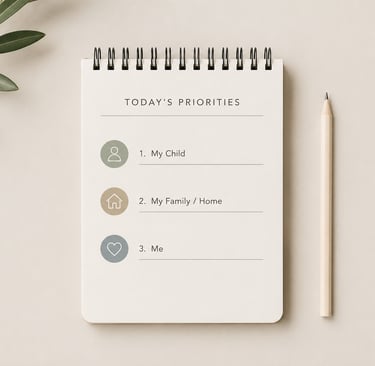
Try this: The Rule of Three
At the beginning of each day, choose only three priorities:
One task for your child.
One task for your family or home.
One task for yourself.
Everything else becomes optional.
Focusing on three meaningful priorities reduces decision fatigue and helps you end the day with a greater sense of progress instead of constant catch-up.

2. Simplify Your Systems
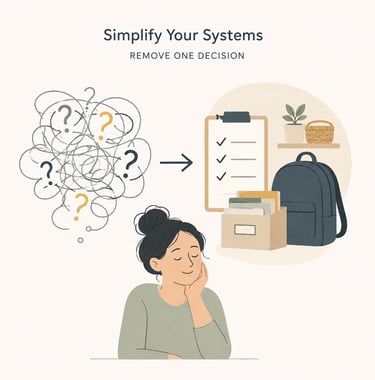
Many parents spend valuable energy remembering rather than living. Every recurring decision uses mental resources that could be saved with a simple routine or visual system.
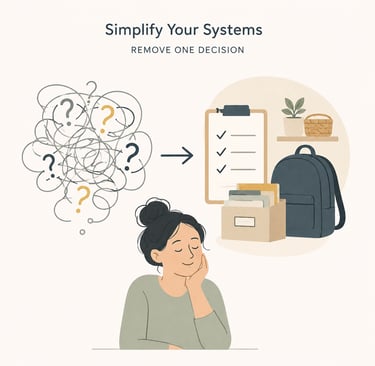
Try this: Remove One Decision
Choose one task you repeat every day.
Ask yourself:
How could this become easier tomorrow?
Perhaps clothes are prepared the night before. School documents live in one folder by the door. Therapy bags stay packed and ready.
Simple systems reduce cognitive load and create more predictable days for both you and your child.
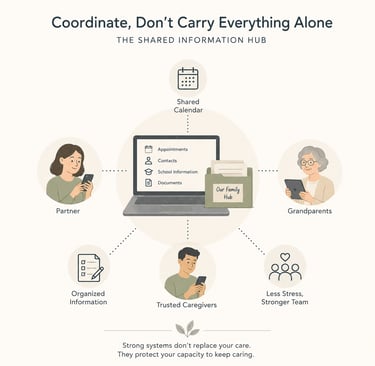
3. Coordinate, Don't Carry Everything Alone
Parents often become the only person holding all the information about appointments, school, therapies, and daily routines. Over time, this invisible workload becomes exhausting.
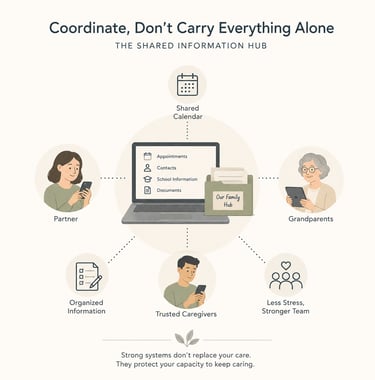
Try this: The Shared Information Hub
Create one central place where important information lives—whether it is a shared digital calendar, a family planner, or a simple folder containing appointments, contacts, school information, and essential documents.
Whenever possible, share this hub with your partner, grandparents, or other trusted caregivers. When everyone has access to the same information, responsibilities become easier to coordinate, communication improves, and the mental load no longer rests on one person's shoulders.
Strong systems don't replace your care. They protect your capacity to keep caring.
A final thought
Strong families are not built on perfect organization.
They are built on systems that continue to work even on the difficult days.
Every routine you simplify, every decision you remove, and every process you put in place creates a little more space for what matters most: your wellbeing, your relationships, and your child's growth.
You do not have to carry everything in your head.
Build systems that carry some of the weight for you.
Small changes to your environment can create lasting changes in your family's daily life.
Connect
Reach out for support and guidance.
© 2026 The Parental Anchor | Elena Arsene, M.Sc. — Psychological Guidance & Parental Well-Being Systems for Parents of Neurodivergent Children.
Disclaimer
Educational Purpose Only: The content, courses, and mentorship provided by The Parental Anchor are for educational and supportive purposes only. This work is focused on parental well-being and resilience; it is not clinical therapy, medical advice, or a substitute for professional mental health diagnosis and treatment.
Professional Boundaries: I do not provide crisis intervention or treatment for severe psychological conditions. If you are experiencing a mental health emergency, please contact your local emergency services or a licensed healthcare provider immediately. By using these resources, you acknowledge that our coaching and digital products are intended for personal growth and preventive well-being.